

Quick Answer for Buyers
Choosing a private label lip balm manufacturer involves more than selecting a fragrance and adding your logo to a tube. A commercially ready lip balm must balance melting point, glide, stick strength, flavor or fragrance direction, packaging compatibility, filling conditions and transport requirements. Before you approve a formula, make sure the product is designed for your target market, preferred packaging format and expected storage conditions.
Lip balm may look like a simple beauty product, but it is one of the most packaging-sensitive and temperature-sensitive categories in lip care. A formula that feels smooth during a sample review may still require further work before it is ready for repeatable filling, long-distance transport and retail use.
For brand owners, distributors and procurement teams, the right development discussion begins with the final product experience: Should the balm be firm and protective, soft and buttery, glossy and cushiony, lightly tinted or completely transparent? Will it be sold in a twist-up stick, squeeze tube, jar or gift set? And how should it perform in the climates, retail channels and logistics conditions relevant to your business?
In This Guide
Unlike most water-based skincare products, lip balms are commonly built around a balance of waxes, oils, butters and other oil-phase ingredients. This means the product’s physical performance is closely linked to temperature, ingredient balance, cooling behavior and the type of packaging selected.
A lip balm must not only look good in its final pack. It should also dispense properly, apply evenly, remain visually consistent, hold its shape and deliver the intended sensory experience throughout its expected storage and use conditions. For this reason, a custom lip balm formulation should be reviewed as a complete system rather than as a bulk formula alone.
At INTE, we can support lip care projects across different product directions, including classic care balms, soft squeeze-tube balms, tinted balm concepts, treatment-style lip masks and selected lip oil or gloss-adjacent formats. If you would like to explore our existing offerings before starting a custom project, please check out our lip care products.
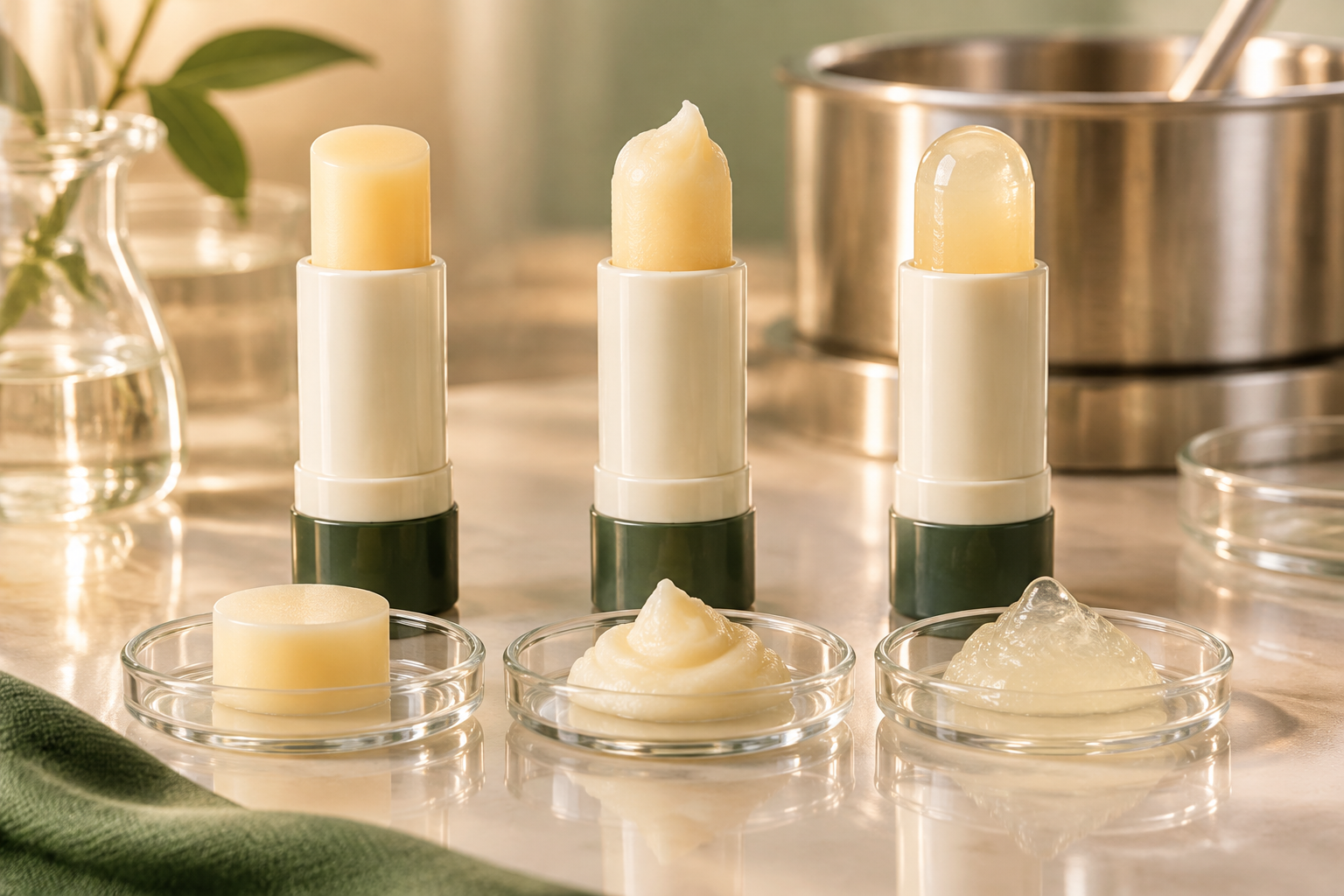
Procurement teams often ask for a lip balm with a “high melting point.” This is understandable, especially for products that may be stored or transported in warmer climates. However, melting point alone does not define whether a lip balm will provide the right performance.
A formula that is too firm may feel draggy on the lips, provide weak payoff or feel less comfortable during application. A formula that is too soft may be more likely to deform, soften excessively in heat or create challenges in a stick format. The objective is to find a balance that suits your product positioning rather than simply targeting the highest possible melting point.
| Performance Area | What Buyers Should Consider | Why It Matters |
|---|---|---|
| Heat Resistance | Target climate, storage expectations and shipping route | The product needs to remain suitable for its expected handling conditions. |
| Glide and Payoff | How easily the balm spreads and transfers during application | This directly affects perceived quality and repeat-purchase potential. |
| Stick Strength | Whether the balm is likely to keep its form in a twist-up pack | An unsuitable hardness balance may affect application and pack performance. |
| Surface Appearance | Finish, smoothness, visual uniformity and possible surface changes over time | Retail-ready presentation matters, especially for transparent or premium packs. |
| Filling Behavior | Bulk flow, cooling behavior and final shape after filling | The formula must be suitable for the selected production and packaging route. |
When briefing a private label lip balm manufacturer, tell us where the product will be sold, whether it may face hot-weather logistics, what packaging format you want and how soft or firm you expect the balm to feel. This information helps us recommend a more practical formula direction before samples are prepared.
Flavor is often one of the strongest emotional drivers in a lip balm purchase. It can support a playful, youthful, premium, seasonal or minimalist brand identity. However, flavor selection should be treated as part of the full formula-development process—not as a last-minute decoration choice.
First, decide whether your product should be fragrance-free, lightly scented, flavor-led, cooling, fruit-inspired, dessert-inspired or built around a more subtle natural profile. The chosen direction should match your target consumer, sales channel and wider product range. A luxury spa-oriented balm may require a very different sensory profile from a colorful impulse-purchase retail balm or a family-focused daily care product.
Where a flavor or fragrance system is included, its documentation, intended cosmetic use, compatibility with the formula and target-market requirements should be reviewed as part of the project. The final claim and label route should also be considered before mass production, especially if the product will be sold across more than one market.
Buyers should also evaluate how the flavor profile works with the natural base note of the formula. Certain oils, butters and waxes may influence the final sensory impression. A successful private label lip balm should feel cohesive: the flavor, texture, color, finish and packaging should communicate the same product story.
Developing a Lip Balm for Your Brand?
Share your preferred format, texture, flavor direction, target market and estimated order quantity. We can help you evaluate a suitable private label lip balm development route.
Discuss Your Lip Balm Project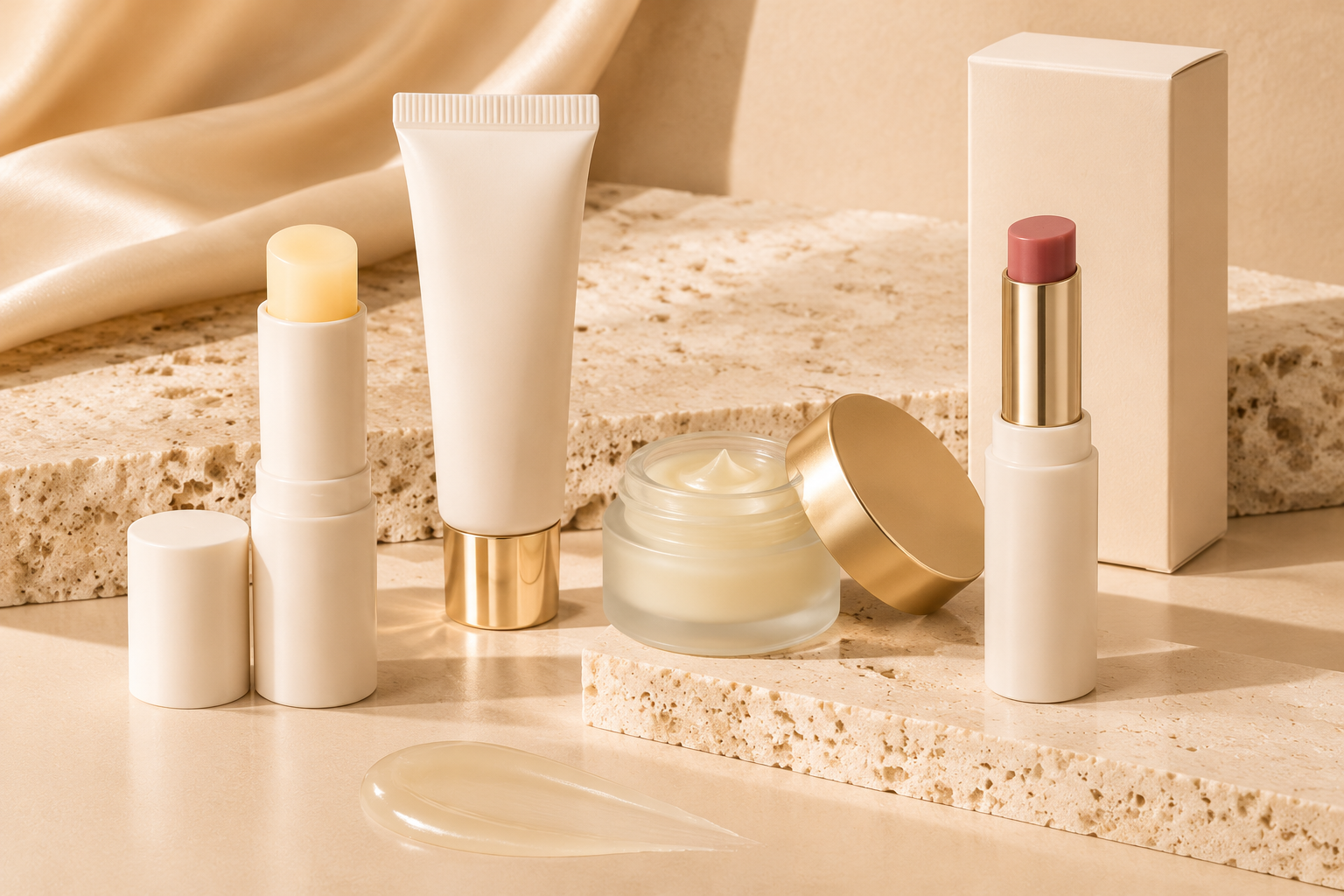
Packaging changes how a lip balm is used, perceived and manufactured. It can also influence the formula’s texture target, the filling method, the cost structure and the product’s suitability for different retail channels. For this reason, it is better to discuss the packaging route early rather than selecting a formula first and a pack later.
| Packaging Format | Typical Product Direction | Key Development Questions |
|---|---|---|
| Twist-Up Stick | Classic daily lip balm and retail-friendly hero product | How firm should the stick be? Is the mechanism compatible with the bulk? |
| Squeeze Tube | Soft balm, glossy balm, overnight lip mask or treatment-style product | Will the formula dispense smoothly without being too fluid or too difficult to squeeze? |
| Jar or Pot | Premium lip mask, gift set or richer care concept | Does the formula provide the desired scoopable or cushiony sensory experience? |
| Tinted Stick | Hybrid lip care and light color cosmetics concept | How should color, payoff, uniformity and stick structure be balanced? |
| Mini or Gift Set | Travel retail, seasonal launches, sampling and promotional sets | What pack sizes, carton structure and component quantities fit the launch plan? |
To review broader packaging possibilities for lip care and other cosmetic categories, visit our Private Label Cosmetic Packaging Guide. We recommend confirming formula-pack compatibility before approving bulk production, particularly for customized components, special decoration or multi-market launches.
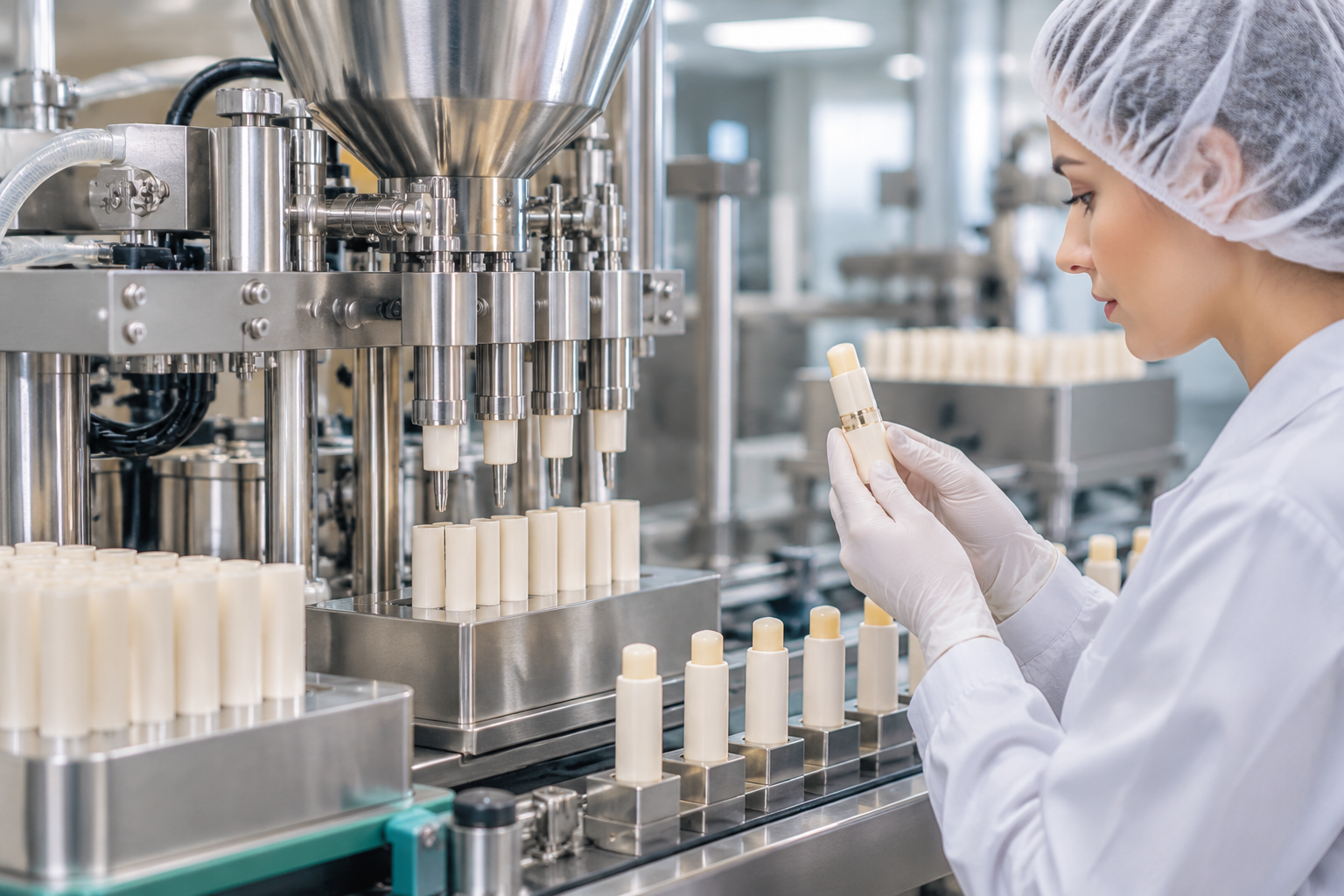
Lip balm tube filling is not only a packaging operation. It is the point where formulation, bulk handling, temperature control, filling parameters, cooling behavior and component selection must work together. A product can perform well in a small lab sample but still require adjustment for reliable commercial-scale production.
During development and production preparation, our team reviews the project according to the selected format. For a twist-up stick, this may include the bulk’s flow behavior during filling, cooling conditions, surface finish, final height and compatibility with the mechanism. For squeeze tubes, the focus may include dispensing behavior, nozzle style, closure fit and the balance between a soft sensory profile and controlled product flow.
Procurement teams should ask their lip balm manufacturer how the formula and packaging will be evaluated together. This is especially important where your project includes an unusual tube shape, custom component, special cap, printed packaging, tint, shimmer effect or premium outer-box concept.
The best private label lip balm manufacturer for your project is not simply the supplier that offers the most formula options. Your manufacturing partner should be able to understand your product brief, identify technical risks early and coordinate formulation, packaging, sampling and production requirements in one workable plan.
Before selecting a supplier, ask the following questions:
If you are comparing manufacturers across several cosmetic categories, our guide to evaluating a cosmetic contract manufacturer can help your team build a more structured supplier-assessment process. For buyers who are new to OEM, ODM or private label cooperation, you can also review our Beauty Products Contract Manufacturing guide.
A successful lip balm is a balance of formula design, product feel, component selection and production practicality. Whether you are planning a classic twist-up stick, a rich overnight lip mask, a flavored squeeze-tube balm or a tinted care product, the development process should begin with a clear commercial and technical brief.
At INTE, we support brands with private label lip balm development from early product direction through formula discussion, sample coordination, packaging selection and production preparation. Our goal is to help you build a lip care product that fits your brand strategy and can move forward with greater confidence.
Ready to Develop Your Private Label Lip Balm?
Tell us your preferred product format, texture direction, flavor preference, target market, packaging idea and estimated order quantity. We will help you evaluate the next steps for your lip balm project.
Request Lip Balm Development SupportThe best format depends on your formula texture, positioning, target customer and retail plan. Twist-up sticks are widely used for classic daily balm concepts, while squeeze tubes can suit softer or glossier formulas. Jars may work well for richer mask-style or premium care products.
Flavor direction can be discussed as part of your private label lip balm project. The selected option should be reviewed alongside the base formula, target sensory experience, intended cosmetic use, documentation requirements and target market.
Melting behavior influences how the balm feels during application, how it performs in its packaging and how it may respond to expected storage or transport conditions. It should be considered together with glide, stick strength, pack type and your target climate—not as an isolated number.
Yes. A tinted lip balm project can be discussed based on your desired shade direction, finish, packaging format, target price point and market requirements. Color, formula feel, stick performance and packaging compatibility should be evaluated together during development.
 Hot News
2026-11-19
2026-11-17
2026-11-13
2026-11-11
2026-11-09
2026-11-06
Copyright © 2025 by Inte Cosmetics (shenzhen) Co., Ltd.
 EN


