EN


White label skincare can offer an efficient route for brands, distributors and retail buyers that want to launch products without beginning every formula from zero. However, a catalog may contain many similar-looking serums, creams, masks and cleansers. The procurement challenge is not asking for every available sample. It is identifying the small number of formulas that are commercially and technically suitable for your brand.
At INTE, we help buyers turn a broad product idea into a more focused sample plan. This article is designed for teams that have already decided to explore white label skincare and now need a practical way to review formula options before committing to packaging, artwork or bulk production.
- Formula selection is not the same as manufacturer selection
- Start with a one-page formula selection brief
- Evaluate formula identity—not only the hero ingredient
- Understand the formula adjustment route
- Build a smarter white label skincare sample basket
- Ask for the right formula information before approval
- Check formula-to-packaging fit early
- Use a green, yellow and red decision matrix
1. Formula Selection Is Not the Same as Manufacturer Selection
Selecting a white label skincare manufacturer and selecting a specific formula are related decisions, but they should not be treated as the same task. Supplier selection asks whether a factory can support your category, packaging route, documentation needs, target market and purchasing plan. Formula selection asks whether one particular product base is right for your commercial concept.
For a broader view of partnership routes, including the differences among private label, OEM and ODM projects, read our guide to working with a private label skincare manufacturer. Once your team has chosen the appropriate cooperation route, the next priority is to evaluate which ready-made skincare formulas deserve a place in your first sample round.
A formula may be technically sound but still be wrong for your product plan. For example, a rich cream can be suitable for a premium barrier-care concept but may not fit a lightweight daily routine. A clear serum may look elegant in a dropper bottle but may not provide the sensorial profile your retail buyer expects. The best choice is the formula that aligns with the full brief—not the one with the longest ingredient story.
2. Start with a One-Page Formula Selection Brief—Not a Long Ingredient Wishlist
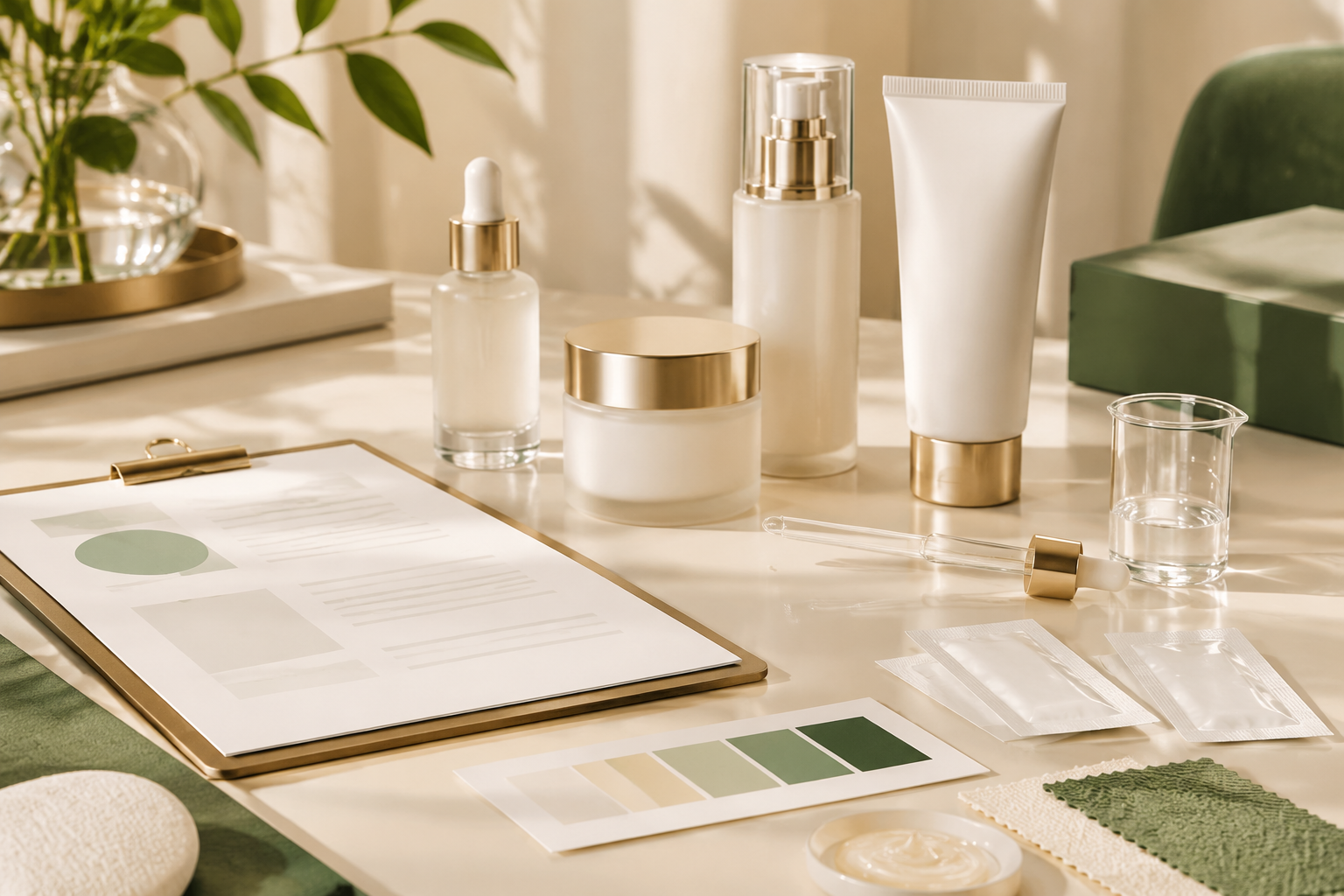
Before requesting white label skincare samples, create a short internal brief. This gives our product team a clearer basis for recommending relevant formulas and helps your buyers compare samples against the same criteria.
| Decision Area | What Your Team Should Define | Why It Matters |
|---|---|---|
| Product role | Hero serum, daily moisturizer, mask, cleanser, travel item or routine step | Clarifies what the formula must do within the complete product line. |
| Target user and usage | Skin feel preference, climate, routine placement and intended use occasion | Helps narrow texture, finish and product format. |
| Ingredient direction | Preferred ingredient story, ingredients to avoid and any benchmark concept | Creates a relevant review framework without treating one ingredient as the full formula. |
| Price and channel position | Online retail, salon, pharmacy-style, gift set, distributor or premium positioning | Influences formula complexity, packaging direction and commercial feasibility. |
| Target market | Destination country or region and known labeling or document expectations | Allows market and documentation questions to be identified early. |
| Sample objective | Texture comparison, sensory approval, packaging trial or benchmark review | Prevents samples from being requested without a decision purpose. |
A good brief is concise. It should tell us what you are trying to launch, who it is for, how it should feel and what decision your sample evaluation needs to support. It does not need to be a finished product specification on day one.
3. Evaluate the Formula Identity, Not Only the Hero Ingredient
Many buyers begin with an ingredient request: centella, hyaluronic acid, peptides, niacinamide, ectoin or another familiar active direction. That is a useful starting point, but it is not enough to evaluate a finished white label skincare formula.
A stronger formula review looks at the complete product identity:
- Base system: Is the product a water-based essence, emulsion, gel cream, balm, clay mask or cleansing system?
- Texture and spreadability: Does it absorb, cushion, refresh, rinse or layer in the way your customer expects?
- Appearance and fragrance direction: Are the color, clarity, scent and overall presentation consistent with your brand positioning?
- Routine role: Does it work as a stand-alone hero SKU, or is it designed to support a wider skincare routine?
- Formula story versus product reality: Can your team describe the product honestly and consistently without relying on exaggerated claims?
Buyer Tip: Compare Like with Like
If you are sourcing a calming serum, compare several calming serum directions under the same usage condition. If you are sourcing a face cream, compare creams with similar texture targets and packaging concepts. A watery toner, gel serum and rich cream should not compete against each other simply because they feature a similar ingredient story.
4. Separate Ready-to-Brand Formulas, Controlled Adjustments and Custom Development
“White label” does not always mean every part of a formula can be changed freely. Suppliers may use the terms white label and private label differently, so buyers should confirm the permitted formula scope before samples are approved.
| Development Route | Typical Starting Point | What Buyers Should Confirm |
|---|---|---|
| Ready-to-brand formula | An established formula selected for your own brand presentation. | Available packaging, formula version, documentation scope and commercial requirements. |
| Controlled adjustment | An existing formula with a limited change request, such as fragrance direction, appearance or sensory preference. | Whether the requested change affects formula stability, product testing, lead time, packaging compatibility or MOQ. |
| Formula adaptation or custom development | A product direction requiring a more substantial benchmark, ingredient, texture or performance change. | Development steps, confirmation stages, technical feasibility and what must be re-evaluated before production. |
Ask a direct question before moving forward: “Which parts of this formula are established, which parts can be adjusted, and what needs to be reconfirmed if we change them?” This gives your purchasing team a more realistic view of the route ahead and helps avoid approving a sample under assumptions that do not apply to bulk production.
Need Help Shortlisting White Label Formulas?
Tell us your product category, target market, preferred texture, ingredient direction and packaging idea. We can help you narrow a broad catalog into a more focused white label skincare sample plan.
Request a Formula Shortlist5. Build a Smarter White Label Skincare Sample Basket
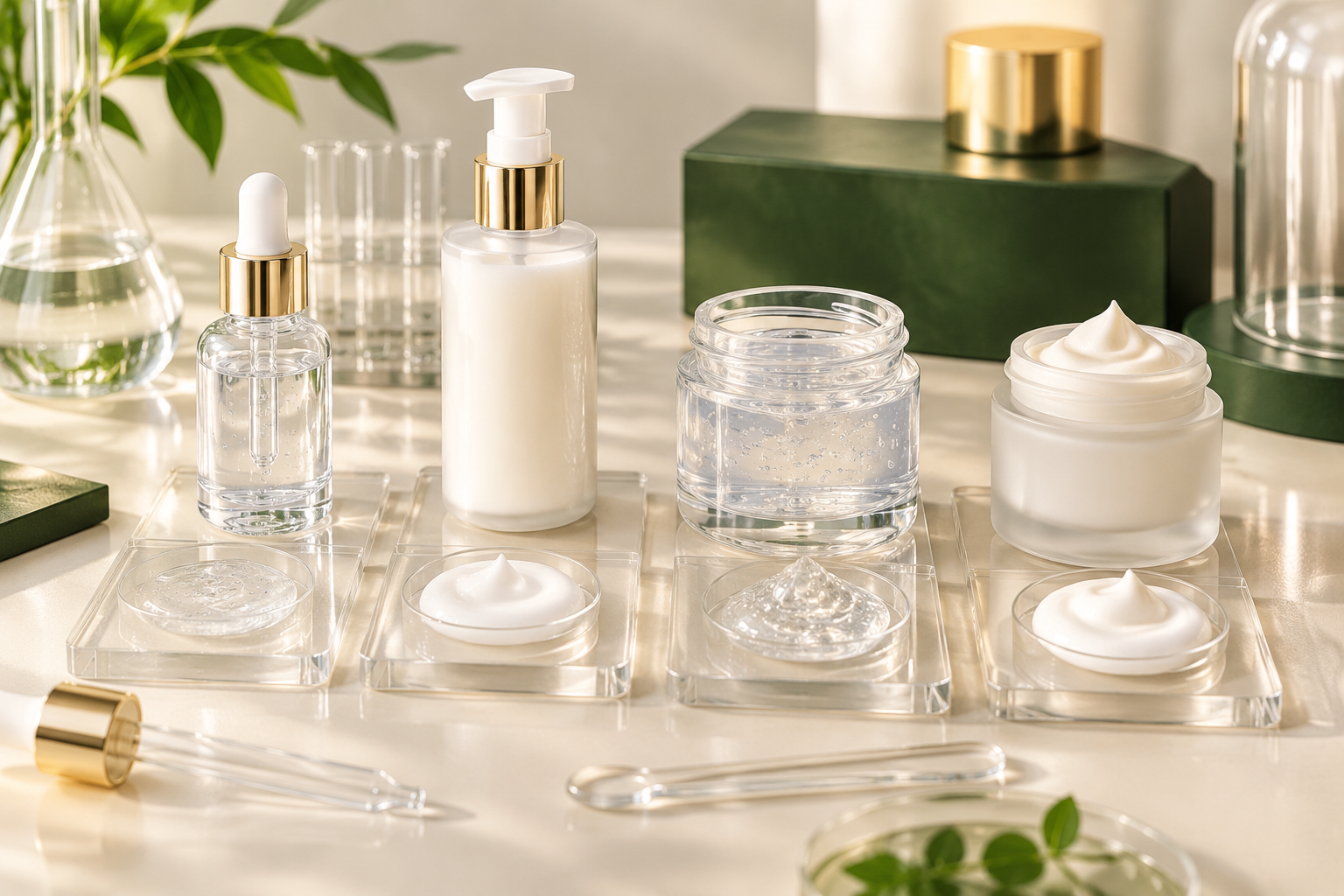
Ordering too many samples often slows the decision process. Instead, create a sample basket with a defined role for each candidate. In many projects, three to four strategically selected samples are more useful than a large, unstructured selection.
| Sample Type | Purpose | Decision It Supports |
|---|---|---|
| Primary candidate | The formula closest to your initial product brief. | Whether the core direction is suitable for your brand. |
| Comparison formula | A different texture, finish or base system within the same product category. | Which sensorial direction your team prefers. |
| Benchmark reference | A formula selected to compare against your existing product or market reference. | Whether the target product position is commercially credible. |
| Packaging trial sample | A selected formula reviewed with its intended bottle, jar, tube or pump direction. | Whether product and packaging function well together. |
During internal evaluation, record the formula code or version, review date, use condition, benchmark reference, sensory feedback, packaging observations and next action. This simple record becomes valuable when your team needs to compare options, align marketing with procurement or return to a formula after packaging discussions.
6. Ask for Formula Information Before You Approve a Sample
A sample is an important decision tool, but it should not be the only information used to approve a white label skincare project. Before confirming a formula direction, buyers should understand what information is available for the selected project and which items may need to be reviewed again after any formula or packaging change.
- What is the formula code or version being sampled?
- What ingredient and product information can be shared for authorized project review?
- What product specifications or packaging considerations apply to this formula?
- Are there existing relevant test reports or technical records available for discussion within the agreed scope?
- What changes would require compatibility, stability, documentation or production details to be reconfirmed?
- What market-specific information should our regulatory partner review before label approval?
Documentation requirements depend on the product, packaging system, claims and destination market. If your product is intended for the United States, European Union or another regulated market, review our guide to cosmetic manufacturing compliance for MoCRA and CPNP-related workflows before finalizing artwork or bulk production.
7. Check Formula-to-Packaging Fit Before You Approve the Direction
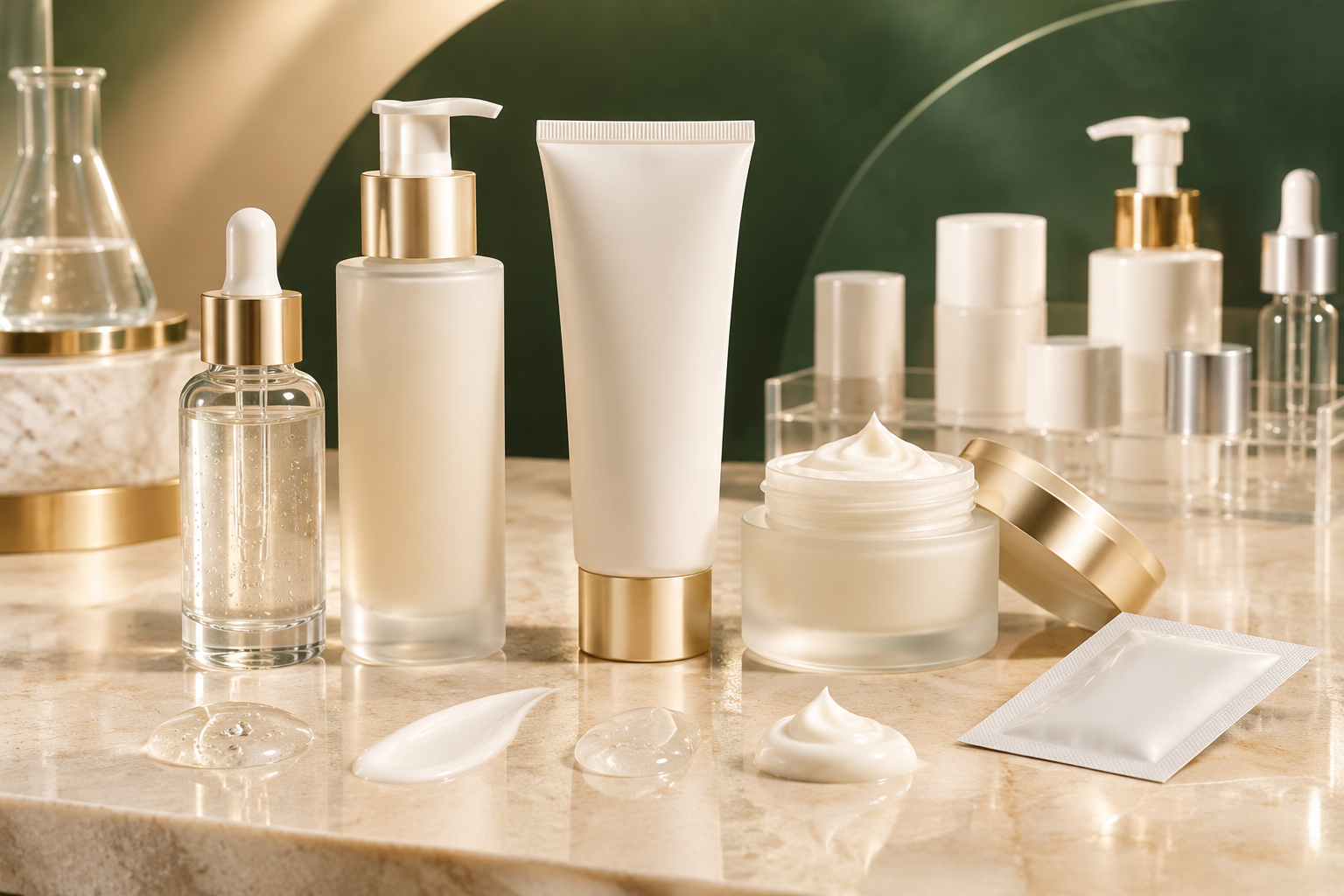
Formula and packaging should be reviewed as one product system. A formula that feels excellent in a laboratory sample may require a different packaging approach for bulk production, dispensing, storage, consumer use or shipping.
- Low-viscosity essences and serums may suit droppers, pumps or treatment-style bottles depending on the application experience.
- Higher-viscosity creams, balms and masks may need jars, tubes or airless packaging with an appropriate dispensing design.
- Ingredient-sensitive concepts may require discussion of opacity, sealing, headspace or other packaging considerations.
- Sets and multi-step routines need packaging choices that remain consistent across the product line and feasible for your order plan.
Before approving a bottle based only on appearance, ask whether the selected formula, fill volume, dispensing method and decoration route have been considered together. Explore our private label cosmetic packaging guide for a wider buyer-focused overview of packaging decisions.
8. Use a Green, Yellow and Red Formula Decision Matrix
Once your team has reviewed samples, use a simple decision matrix rather than relying on general impressions. This makes it easier to identify whether a formula can progress, needs clarification or should be removed from the shortlist.
| Status | Meaning | Recommended Next Step |
|---|---|---|
| Green | The formula fits the product brief, sensory target, packaging direction and commercial plan. | Confirm the formula version, packaging route, artwork process and project-specific requirements. |
| Yellow | The formula is promising but requires clarification, comparison or a controlled adjustment. | Define the exact revision question before requesting another sample or packaging review. |
| Red | The formula does not match the product role, brand positioning, sensory direction, market plan or packaging needs. | Remove it from the sample plan and focus on a more suitable formula direction. |
What to Send Us Before Requesting White Label Skincare Samples
You do not need a fully completed specification to begin. However, the following details help us recommend white label skincare formulas more efficiently:
- Your product category, such as serum, essence, cream, mask or cleanser;
- The intended product role and target customer;
- Your destination market and known regulatory or labeling considerations;
- Preferred texture, finish, fragrance direction or ingredients to avoid;
- A benchmark product, reference image or existing product concept, if available;
- Preferred packaging format and estimated purchase scope;
- Whether you need a ready-to-brand formula, a controlled adjustment or a more customized development route.
If you are planning a broader facial skincare range rather than a single SKU, you can also explore our face care product directions to help define the formats you want to prioritize.
Turn a Formula Catalog into a Focused Sample Plan
Share your white label skincare brief with us. Our team can help you evaluate suitable formula directions, compare sample options and align formula selection with packaging and production planning.
Request White Label Skincare SamplesFrequently Asked Questions
What is the difference between white label skincare and private label skincare?
The terms are sometimes used differently by different suppliers. In many projects, white label skincare refers to an established formula that can be branded for your business, while private label may include a broader level of branding, packaging or formula selection support. Always confirm formula ownership, permitted adjustments, documentation scope and packaging options with the manufacturer before approving samples.
Can we change the fragrance or texture of a white label skincare formula?
It depends on the formula and the requested change. Some adjustments may be practical, while others can affect product stability, packaging compatibility, documentation, production planning or commercial requirements. We recommend discussing the intended change before selecting a final sample direction.
Should we approve packaging before ordering white label skincare samples?
You can begin formula evaluation before packaging is finalized. However, your selected formula and final packaging should be reviewed together before bulk production, especially when viscosity, dispensing, appearance, sealing or compatibility may affect the finished product experience.
How many white label skincare samples should we request?
The right number depends on your product brief. In most cases, a focused group of primary, comparison and benchmark samples is more useful than a large unstructured request. Each sample should have a clear evaluation purpose.
Can INTE help us select formulas for a complete skincare line?
Yes. We can help buyers discuss formula directions across coordinated skincare formats, such as cleansers, toners, serums, creams, masks and selected treatment products. Share your target market, preferred category mix and packaging direction so we can recommend a practical starting point.
Note: Formula availability, permitted adjustments, testing requirements, packaging compatibility, documentation scope and production conditions are project-specific. Please confirm the final requirements with our team before approving samples, artwork or bulk production.
 Hot News