EN


PRODUCT DEVELOPMENT & FORMULATION
Dual-chamber skincare packaging can help brands create a more differentiated active-treatment concept—but it is not automatically the right choice for every serum, ampoule or cosmetic formula. For procurement teams, the key question is whether separate storage, fresh activation and a more technical usage experience create enough product value to justify the added development, component and production complexity.
1. What Is Dual-Chamber Skincare Packaging?
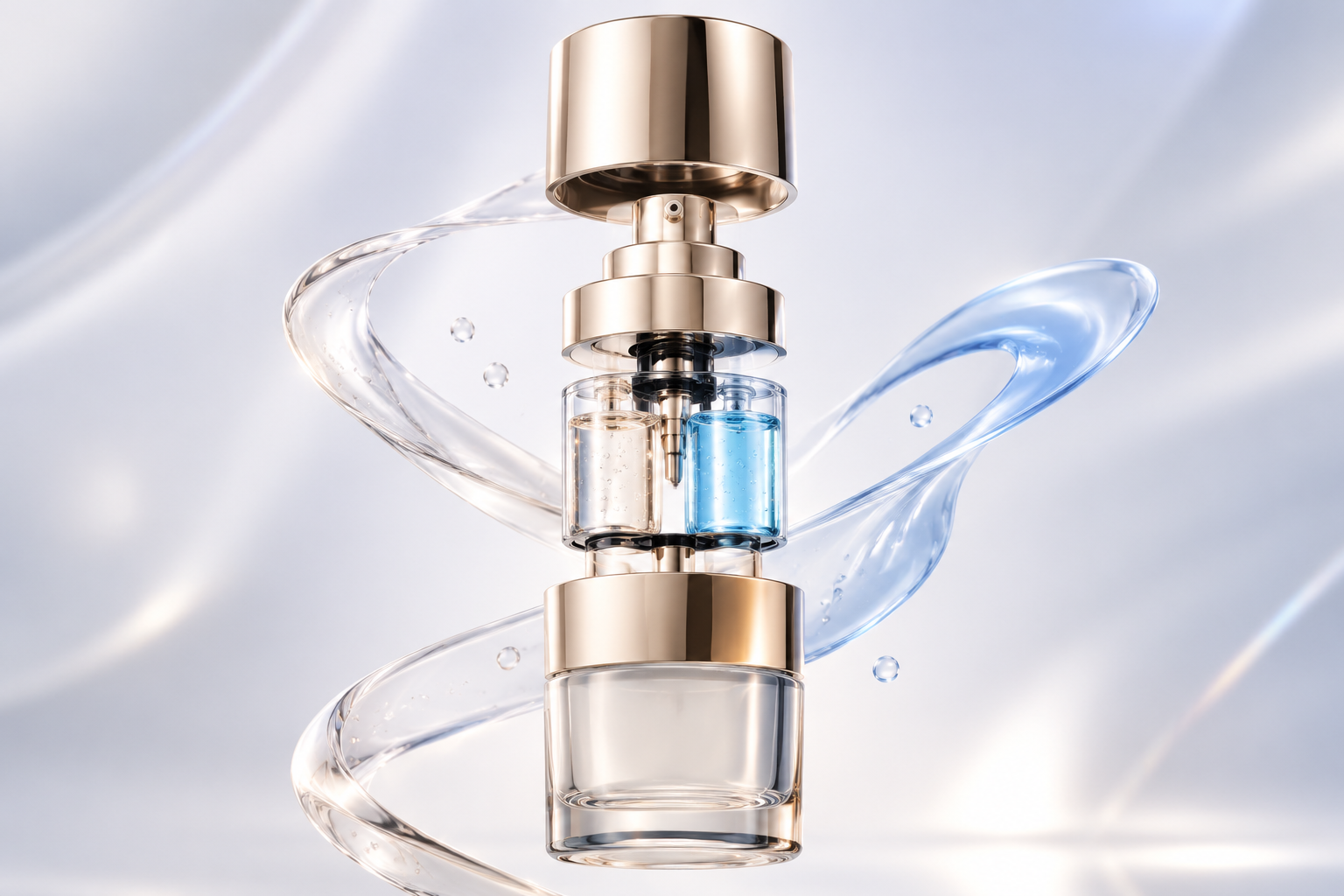
Dual-chamber skincare packaging uses two isolated storage spaces within one product system or paired-use format. The chambers may hold two liquid phases, a serum and an activator, a powder and a liquid, or two components designed to be combined immediately before application.
Depending on the packaging structure, users may activate the product by twisting, pressing, pushing, breaking an internal seal or combining two separate doses. The route should be selected according to the formula, the intended usage ritual, the target price point and the expected production scale—not only because the pack looks more premium.
For example, a copper-peptide, vitamin, botanical extract or other active-led concept may be assessed for separate storage when the development team identifies a reason to explore different storage conditions, component interaction, visual stability or a fresh-mix product story. Whether a dual-chamber route is appropriate must still be confirmed through project-specific formula, compatibility and stability evaluation.
2. When Is a Dual-Chamber Format Worth Considering?
The best dual-chamber skincare projects begin with a clear commercial and technical reason. A standard bottle, airless pump, glass ampoule or single-use format may be more efficient when the formula is already stable, the target retail price is value-driven, or the launch timeline is tight.
| Buyer Situation | Should You Explore Dual-Chamber Packaging? | Why It May Matter |
|---|---|---|
| Two components may benefit from separate storage before use | Yes, subject to technical testing | Separate chambers can provide an additional development route when a combined system requires further evaluation. |
| The product story depends on “fresh activation” | Often worth exploring | The activation step can create a more distinctive treatment experience and support premium positioning. |
| The formula is a standard hydration or daily-use serum | Usually not the first choice | A conventional bottle or airless pack may offer a more efficient cost, sourcing and filling route. |
| The brand is planning a gift set, professional treatment or high-value hero SKU | Worth reviewing | Packaging can become part of the product differentiation, retail presentation and usage ritual. |
| The project has a short timeline or highly limited development budget | Review carefully before committing | Custom components, fit testing and assembly verification can add development time and procurement complexity. |
3. Formula and Stability Questions to Resolve First
Packaging should not be selected in isolation. Before choosing a dual-chamber skincare packaging route, our team recommends reviewing the formula brief and commercial objective together with the buyer’s packaging direction.
- What will each chamber contain: water-based serum, oil phase, gel, emulsion, powder or concentrated active solution?
- What is expected to happen after activation: immediate blending, gradual dispersion or a two-step application process?
- Does the combined product need to remain visually uniform after mixing?
- Are color, odor, viscosity, pH, texture or sensory changes important to evaluate during development?
- Does the formula require specific light, oxygen, hygiene or dosage considerations?
- Can the intended fill volume and texture work with the selected dispensing or activation mechanism?
4. Common Activation Routes and Buyer Trade-Offs
Dual-chamber systems can be designed in several ways. The most suitable direction depends on the desired consumer action, formula texture, fill volume, component availability and the level of customization the project can support.
| Format Direction | Typical Buyer Experience | Possible Project Use | Key Review Point |
|---|---|---|---|
| Twist-to-activate component | The user twists or rotates the pack to release a second component. | Premium serum, treatment essence or limited-edition launch. | Is the activation action intuitive, reliable and easy to explain? |
| Push-to-mix dispensing system | The user presses a mechanism before or during product dispensing. | Serum, lotion or treatment format with a repeat-use concept. | Does the system provide a consistent output and mixing result? |
| Paired vial or dual-dose format | Two separate doses are used together in a defined sequence. | Short-course treatment, professional use or skincare set. | Are the two components clearly matched, protected and easy to organize? |
| Powder-liquid activation concept | The user combines a dry component with a liquid immediately before use. | Fresh-mix or active-led treatment project. | How will moisture protection, sealing and mixing performance be verified? |
Planning a Fresh-Activation Serum Concept?
Share your target market, active direction, fill size, product format, expected order volume and preferred activation experience. We can help you assess whether a dual-chamber route is appropriate before you invest in packaging development.
Discuss a Dual-Chamber Project
5. From Packaging Concept to Bulk Production
A dual-chamber project is not simply a matter of selecting a bottle. It requires formula development, packaging sourcing, filling, assembly and quality review to move in the same direction. A visually strong prototype may still require adjustment before it becomes production-ready.
During sampling and production planning, buyers should ask how the project will be evaluated from component receipt through final packing. This should include chamber volume, filling sequence, torque or closure performance, activation function, sealing, leakage risk, labeling space, carton protection and transport readiness.
Buyers who are still defining their broader packaging direction can also review our private label cosmetic packaging guide. It explains why formula compatibility, dispensing performance, decoration, secondary packaging and production readiness should be reviewed as one system.
What Procurement Teams Should Confirm Before Bulk Production
- Approved formula and separate chamber fill specifications;
- Confirmed packaging components, colors, finishes and decoration files;
- Activation and dispensing performance after assembly;
- Leakage, seal integrity and transport protection requirements;
- Packaging component lead time, supply continuity and replacement options;
- Required testing, documentation and target-market label information;
- Final MOQ, production schedule and component approval milestones.
6. Dual-Chamber vs. Other Active Serum Formats
Dual-chamber skincare packaging is only one route among several. Buyers should select the format that best fits the formula, sales channel, usage occasion, brand positioning and supply-chain requirements.
| Format | Primary Decision Logic | Best Evaluated When |
|---|---|---|
| Dual-Chamber Packaging | Separate storage or fresh activation is central to the product concept. | Two components, a premium activation story or differentiated use experience are important. |
| Glass Ampoule | Single-dose presentation, sealed use and premium treatment positioning. | The project requires a concentrated, defined-dose format with a distinctive opening experience. |
| BFS Single-Use Serum | Lightweight, unit-dose and travel-friendly active skincare delivery. | The brand needs a scalable single-use route with a different packaging and filling logic from glass. |
| Airless Bottle or Standard Serum Pack | Daily use, repeat dispensing and efficient mainstream production. | The formula is stable in one system and activation is not a required product feature. |
For a detailed comparison of glass ampoules and blow-fill-seal unit-dose packaging, read our single-use and ampoule serum manufacturing guide. If your project is already focused on product selection, you can also browse our ampoule and single-use serum formats.

7. Buyer Checklist Before Requesting Samples
- Does the product concept have a clear reason for separate storage or fresh activation?
- Have we defined the two formula components and the desired mixing or usage sequence?
- Do we know the intended fill volume, application area and target retail positioning?
- Is the activation step simple enough for the intended customer to understand?
- Have we reserved sufficient time for packaging samples, compatibility review and production validation?
- Can our target order volume support the selected component and customization route?
- Have we considered leakage prevention, transport protection and secondary packaging?
- Have we shared the destination market and labeling requirements with the manufacturer?
If you are at an earlier stage, our product development and formulation support can help structure the project brief before sampling. A clearer brief helps reduce unnecessary packaging iterations and makes supplier evaluation more efficient.
Frequently Asked Questions
Is dual-chamber skincare packaging suitable for every active formula?
No. It should be evaluated when separate storage, fresh activation or a differentiated user experience creates a meaningful benefit for the project. Many stable formulas can be produced efficiently in a standard airless bottle, serum bottle or single-use format.
Can dual-chamber packaging be used for private label projects?
It may be possible depending on the selected component, formula direction, customization level, target order volume and production schedule. The packaging route should be reviewed with the product brief before samples are confirmed.
Does a dual-chamber design eliminate the need for stability testing?
No. Dual-chamber packaging does not replace formula stability, packaging compatibility, seal integrity, transport or production validation. These checks remain important before bulk manufacturing.
What should buyers provide before requesting a dual-chamber sample?
Share your product concept, target market, active direction, preferred formula textures, fill size, desired activation method, packaging reference, expected quantity and launch timeline. This information helps us recommend a more suitable development route.
Evaluate Your Dual-Chamber Packaging Route Before Sampling
Whether you are planning a fresh-mix serum, a two-component treatment, a premium ampoule concept or a differentiated active skincare launch, send us your project brief. We can review formula direction, packaging feasibility and the next development steps with you.
Request a Packaging Feasibility Review Hot News