 EN


What separates eye cream textures for humid and dry markets?
For a private-label team, climate is not a small finishing detail in an eye cream brief. It changes what users notice first: slip, pickup, spread, dry-down, residue, and how the product sits beneath the rest of a routine. From a formulation-development perspective, the useful question is not whether one eye cream texture is superior. It is whether the texture supports the intended user, usage step, and market conditions.
That distinction matters because the skin around the eyes is commonly evaluated through feel as much as through the product story. A rich eye cream can feel reassuring in a dry environment yet feel heavy to a shopper in sustained humidity. A light gel-cream can feel fresh in a warm market yet leave another user asking for more cushion. The right brief starts with those conditions rather than with a fashionable ingredient list.
Climate changes the sensory job of an eye cream
An eye cream is usually applied in a small amount, but the sensory signal is concentrated. Users may notice whether it pauses before spreading, drags during application, layers over serum, or leaves a film once sunscreen or makeup follows. Climate does not determine the whole formulation on its own; skin type, routine, channel, packaging, and regional expectations also matter. Still, it is a practical input for defining the sensory target.
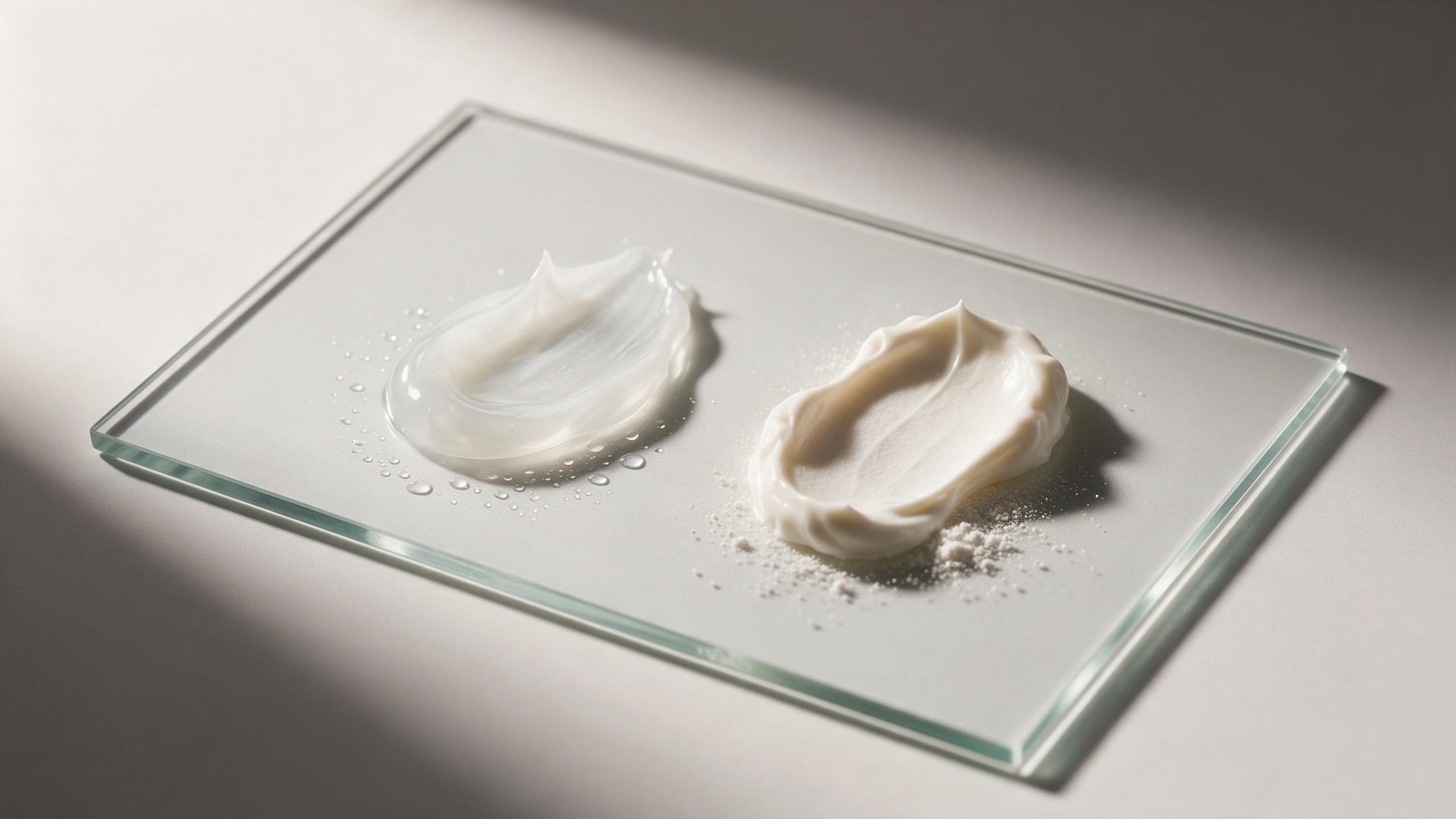
For humid-market projects, the working goal is often a lighter, quicker-settling eye cream that does not make the routine feel crowded. That can point a team toward a fluid lotion, gel-cream, or light emulsion direction. The development brief should describe the desired experience in observable terms: easy pickup, short rub-in, low tack, and a finish that remains comfortable after the next routine step. Those are sample-evaluation prompts, not universal performance promises.
For dry-market projects, the brief may call for a more cushioning eye cream with longer playtime and a more substantial finish. Here, the goal is not simply to add richness. A dense texture that drags or piles may not match the intended experience. The team should instead specify what “comfort” means for this project: a soft glide, a uniform film, a finish that does not feel abruptly dry, and compatibility with the surrounding routine.
Compare texture targets before comparing ingredients
It is easy to begin an eye cream discussion with a named active or a marketing concept. More accurately, teams should first decide what the finished texture must do. A formulation consultant can then assess ingredient and system choices against that target. This order helps a brand avoid treating an ingredient concept as proof of the final sensorial result.
| Briefing dimension | Humid-market direction | Dry-market direction |
|---|---|---|
| Initial pickup | Small, clean pickup with minimal excess | Controlled pickup that still feels cushioned |
| Spread | Quick distribution with a light glide | Gentle glide with enough playtime for a soft massage |
| Set and finish | Comfortable, low-residue finish before the next step | Comfortable finish with a more enveloping feel |
| Routine fit | Consider sunscreen, makeup, and warm-weather layering | Consider cleansing habits, overnight routines, and drier indoor conditions |
| Sample questions | Does the eye cream feel light without seeming abrupt? | Does the eye cream feel supportive without feeling overbuilt? |
The table is a comparison framework, not a formula specification. A humid-market eye cream may still need a velvety finish for a premium channel, while a dry-market concept may need to remain light for daytime use. The variables only become useful when the brand ranks them: fast dry-down, soft after-feel, makeup compatibility, night-use comfort, or a particular package experience.
Translate market language into a testable development brief
“Lightweight” and “nourishing” are common starting points, but they are too broad to guide an eye cream sample review. A stronger brief turns each phrase into conditions the team can examine. For example, “lightweight for humid use” might mean the sample spreads in a few passes, settles without a sticky pause, and stays comfortable when a second skincare layer follows. “Comforting for dry use” might mean the sample gives a soft, even glide and leaves a balanced finish after a defined wait time.
This is where sample feedback should become specific. Rather than writing “the eye cream feels good,” ask reviewers to note pickup, friction, spread distance, finish, and interaction with the next step. Include the test setting: time of day, room conditions where relevant, amount applied, skin-prep sequence, and package format. The aim is to turn subjective impressions into comparable development notes without pretending that one small panel stands for an entire market.
- Define the intended climate and channel before the first eye cream sample is reviewed.
- State whether the main use is daytime, nighttime, or both.
- Rank the top three sensory priorities instead of listing every desirable attribute.
- Ask reviewers to compare samples under the same routine sequence.
- Keep efficacy, sensory description, and substantiation requirements as separate workstreams.
Texture also affects packaging and product communication
A climate-led eye cream concept should not end with the bulk formula. Packaging can change how much product is dispensed, whether the user applies too much, and how controlled the application feels. A light texture in a wide opening can lead to a different experience than the same texture in a narrow-nozzle format. Likewise, a richer eye cream may need packaging that supports measured pickup without making the formula appear difficult to use.
Product communication should stay equally precise. It can describe the intended texture and routine context, but it should not turn a sensory preference into an unsupported treatment claim. A phrase such as “designed for a quick, comfortable daytime finish” is a product-positioning direction that still needs sample confirmation. A phrase that promises a medical or universal outcome crosses a different evidentiary boundary.
A practical decision sequence for brand teams
When choosing between humid and dry market directions, start with the user’s routine rather than a single climate label. First, define the target market, channel, and likely time of use. Next, rank the texture priorities for the eye cream: quick-set feel, cushioning glide, low residue, layering behavior, or a more substantial finish. Then ask the development team for samples that deliberately vary the texture direction rather than for several nearly identical versions.
During review, document what changes when the eye cream is used after a serum, before sunscreen, or as part of an evening routine. If feedback conflicts, do not force a single answer too early. The disagreement may show that the concept needs a clearer segment, a different usage instruction, or separate daytime and nighttime directions. This may be a worthwhile test path, but suitability still depends on the target user and the finished formula’s evaluated performance.
The takeaway: brief the experience, then verify it
The difference between an eye cream for humid and dry markets is usually less about declaring one texture right and more about defining the experience the market is meant to receive. Humid-market briefs often prioritize a light, low-residue path; dry-market briefs often ask for more cushion and a longer comfort window. Both directions require sample review, routine testing, and careful claims review.
For an OEM/ODM discussion, a useful starting brief names the market, routine step, preferred finish, packaging idea, and the questions to verify in samples. That gives the formulation conversation a clearer purpose and helps the final eye cream concept remain aligned with its intended users.
 Hot News


