Choosing a cosmetic contract manufacturer is not only about formula samples, product photos or the lowest quotation. Before approving a supplier, beauty brands should understand how the manufacturer manages materials, production, packaging, quality checks, batch records and final product release.
Whether you are launching skincare, body care, hair care, lip care or color cosmetics, the right manufacturing partner should be able to communicate clearly about production capability, quality controls, documentation scope and the practical steps required to move from an approved sample to bulk production.
Quick Answer for Buyers
A qualified cosmetic contract manufacturer should be evaluated on more than a certificate or catalog. Buyers should verify the actual manufacturing scope, product category fit, material controls, production process, testing approach, packaging coordination, batch traceability, documentation support and readiness for bulk production.
Evaluating a New Cosmetics Manufacturing Partner?
Share your product category, target market, packaging direction and estimated order quantity. Our team can help you assess the practical manufacturing route for your project.
Request a Manufacturing Capability Assessment →Before comparing quality systems or quotations, buyers should first understand the supplier’s operational role. Some companies coordinate sourcing and communication, while others directly manage formulation, filling, packaging and quality release. Neither model is automatically better, but the scope must be clear before you approve a project.
The key question is simple: Which legal entity and manufacturing site will formulate, fill, inspect and release my product? A reliable supplier should be able to explain this clearly, including which parts of the project are performed in-house and which services require external coordination.
| Supplier Type | Typical Role | What Buyers Should Confirm |
|---|---|---|
| Trading Company | Coordinates product sourcing, communication and commercial terms. | Which factory owns formulation, filling, quality inspection and production release? |
| Cosmetic Manufacturer | Manufactures products according to defined formula, packaging and production specifications. | Does the facility support your product type, packaging format, order volume and target market needs? |
| Full-Service Manufacturing Partner | Supports formula development, packaging coordination, production planning and project management. | What is included in the service scope, what is optional and who owns each approval step? |
For brands still deciding between private label, OEM and ODM routes, read our Beauty Products Contract Manufacturing guide for a practical overview of the different cooperation models.
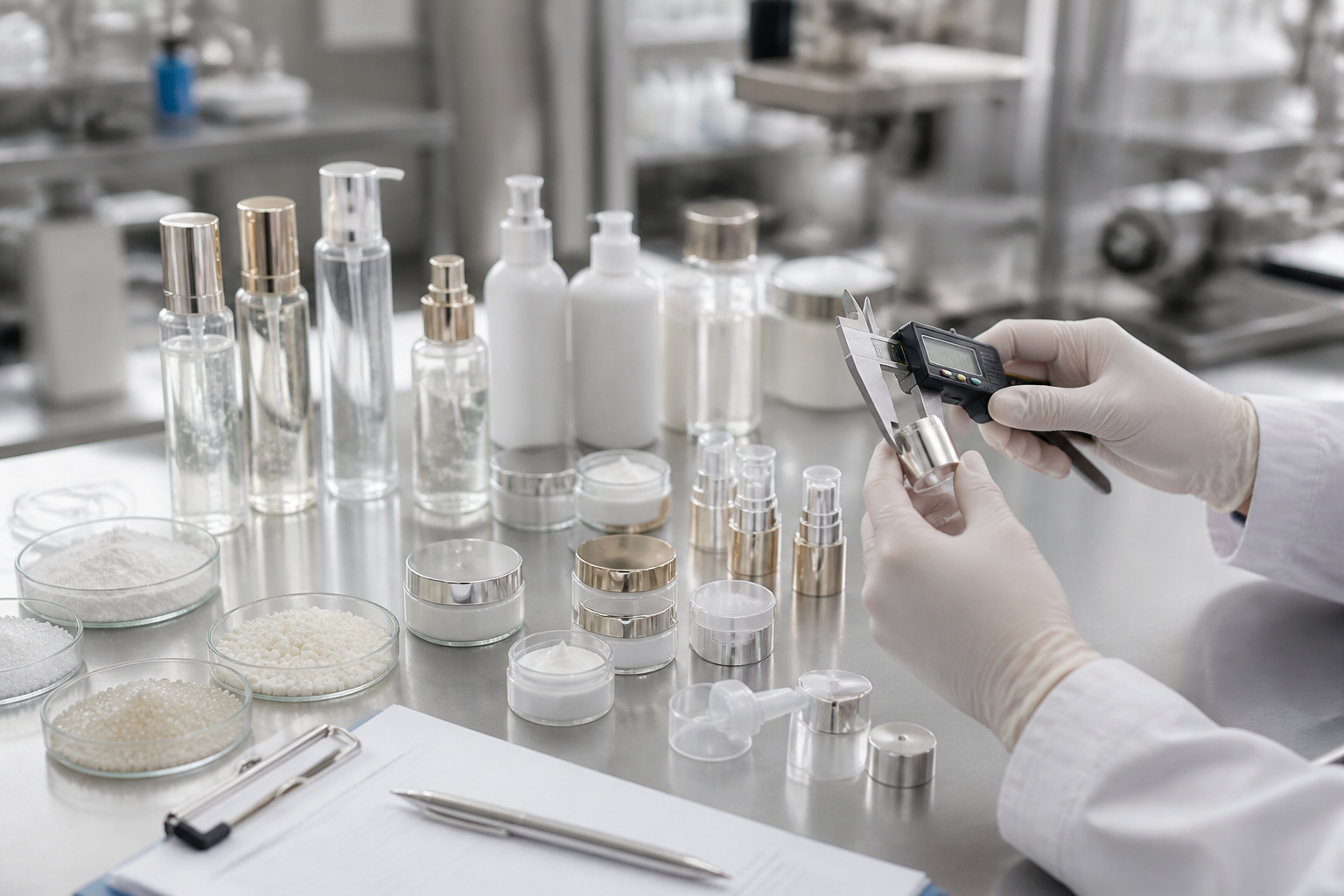
Certificates can be useful starting points during supplier screening, but a certificate alone does not tell you how a manufacturer manages your specific formula, raw materials, packaging components or production batch. Mature procurement teams look beyond logos and ask what the supplier actually controls on a day-to-day basis.
A practical quality system should connect people, procedures, materials, equipment, records and release decisions. It should help reduce avoidable issues such as incorrect materials, formula deviations, packaging mix-ups, inconsistent filling, damaged components or incomplete batch records.
Buyer Reminder
Do not treat a cleanroom classification, a GMP-related certificate, a factory audit or market-specific compliance as interchangeable claims. They may all be relevant, but each represents a different part of the supplier evaluation process and should be reviewed according to the product, manufacturing scope and destination market.
A cosmetics project should not rely on one final inspection alone. Quality is built through planned controls across the full manufacturing journey—from receiving ingredients and packaging materials to final product release.
| Project Stage | What Buyers Should Ask About | Why It Matters |
|---|---|---|
| Before Production | Formula confirmation, material acceptance, packaging specifications, artwork approval and production instructions. | Helps reduce ambiguity before the production batch begins. |
| During Production | Weighing checks, batch identification, in-process controls, filling checks, line clearance and label reconciliation. | Supports batch consistency and helps prevent avoidable mix-ups or process errors. |
| Before Product Release | Finished-product appearance, packaging condition, fill presentation, product specifications and release documentation. | Helps confirm that the finished batch matches the approved product and packaging requirements. |

The exact checks will vary by product category. A facial serum, sunscreen, shampoo, lip balm, face cream and color cosmetic may require different formula, packaging and process considerations. The goal is not to apply one generic checklist to every product, but to establish the right control plan for the actual product being manufactured.
When a supplier references GMP, ISO standards, audits or other quality credentials, buyers should ask for enough detail to understand the practical scope. The purpose is not to create unnecessary paperwork; it is to confirm that the evidence applies to the actual entity, manufacturing site and product category involved in your project.
Compliance requirements also vary by destination market. Before launch, brands should confirm the relevant product classification, labeling, claims, documentation, registration or responsible-party requirements for the market where the product will be sold.
Experienced procurement teams do not only ask, “Do you have quality control?” They ask what can be documented, reviewed and traced when a product is approved for production or released for delivery.
The documents available for a project will depend on the cooperation model, destination market, confidentiality requirements and production scope. However, buyers can use the following list as a practical discussion framework.
Quality and Production Evidence Checklist
The most useful supplier relationship is one where the manufacturer can explain not only what documents exist, but also how those documents support clear approvals, controlled changes and traceability throughout the project.
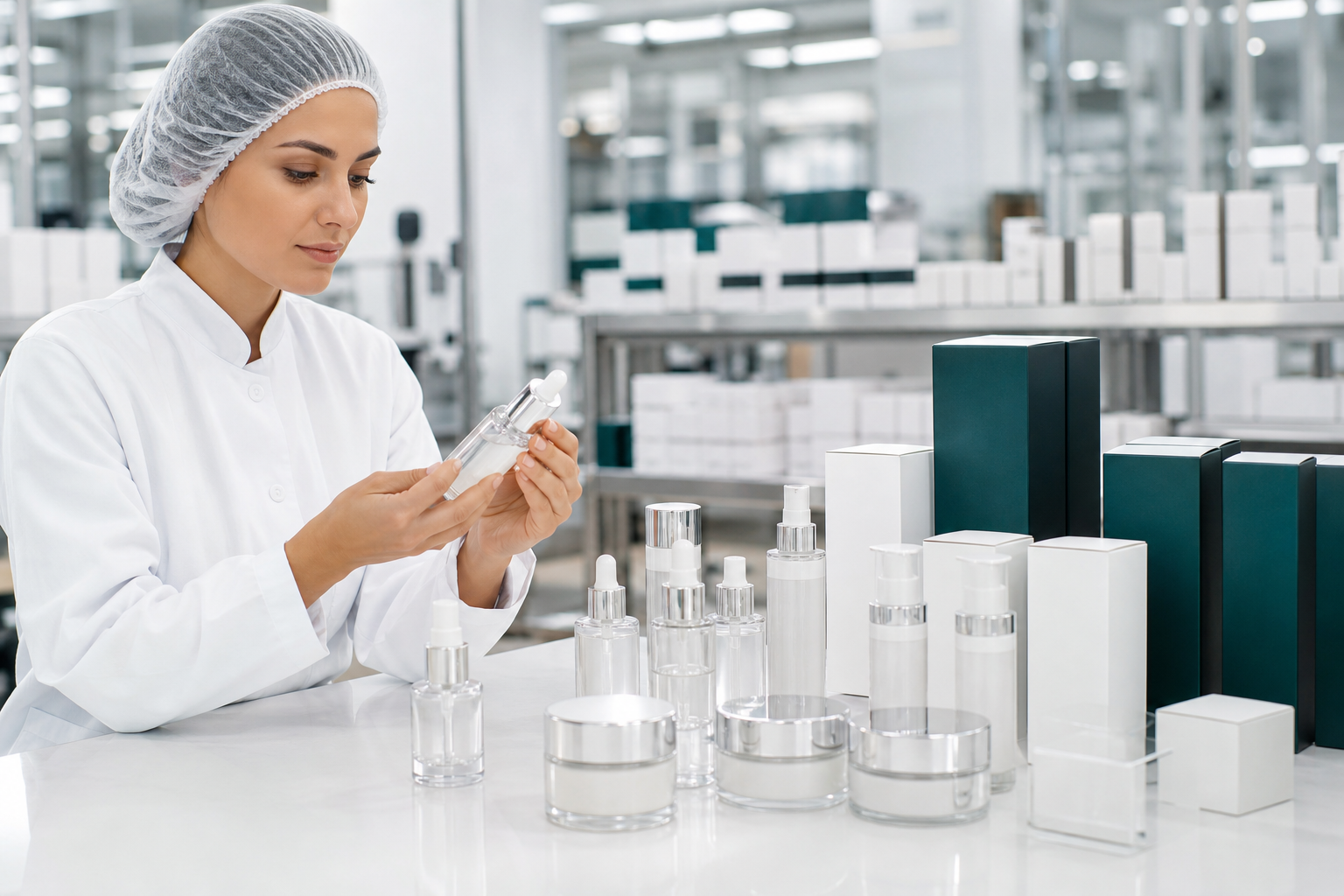
An approved formula sample is an important milestone, but it does not automatically mean that a project is ready for bulk production. Before placing a purchase order, both the brand and manufacturer should align the formula, packaging, artwork, product specifications, quantity, timing and release expectations.
A Product Is Production-Ready When:
Early alignment reduces the risk of last-minute packaging changes, artwork revisions, incorrect components, delays caused by missing approvals or commercially unrealistic production expectations.
Need to Review Your Product’s Production Readiness?
Send us your product category, preferred formula direction, packaging concept, target market and estimated quantity. We can help you identify the key manufacturing decisions before you move into bulk production.
Discuss Quality and Production Planning →Use this checklist when comparing suppliers, preparing for a factory discussion or reviewing a quotation. It is designed to help beauty brands move from a general supplier search to a more structured manufacturing evaluation.
A manufacturer does not need to promise that every project will be identical. What matters is whether the supplier can explain the process clearly, identify project-specific risks early and coordinate the practical steps required for consistent production.
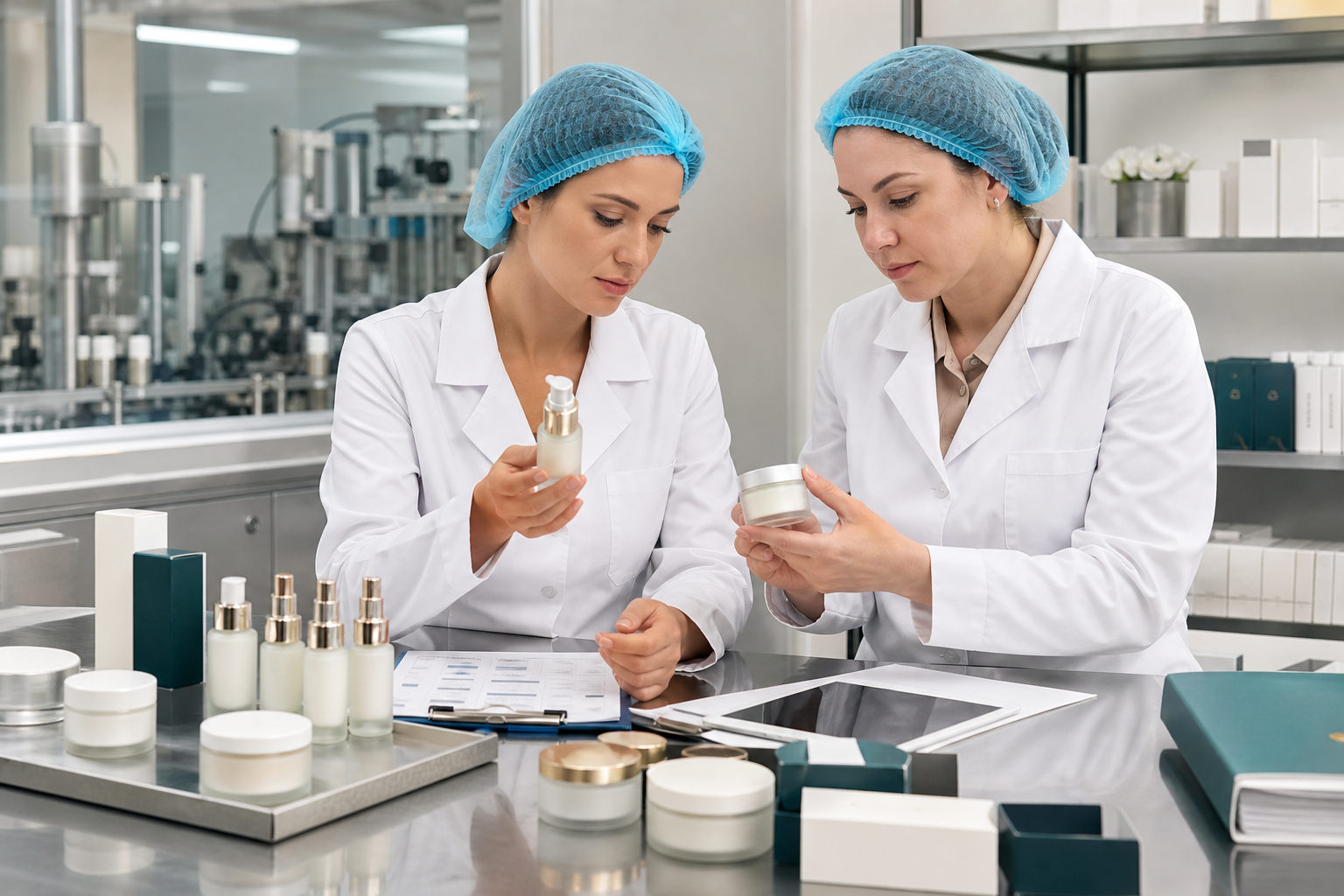
Ask about the manufacturing site, product-category experience, formula route, packaging compatibility, quality controls, MOQ, lead time, batch traceability, documentation scope and the approvals required before bulk production.
It is a useful starting point, but it should not be the only qualification factor. Buyers should also verify the certificate holder, manufacturing site, scope, product-category fit, operational quality controls and the supplier’s ability to support the specific project.
Batch traceability is the ability to connect a finished cosmetic product to relevant manufacturing information, such as its batch or lot identification, materials, packaging components and production records. The practical scope depends on the manufacturer’s procedures and the project requirements.
Product testing evaluates defined product characteristics or performance-related requirements, while production quality control focuses on managing materials, manufacturing conditions, filling, packaging and release checks during the production process. Both should be discussed according to the product type and target market.
Responsibilities can vary by destination market, commercial structure and the role of the manufacturer, brand, importer, distributor or responsible person. Brands should confirm responsibilities in writing before product launch and should not assume that all obligations automatically transfer to the factory.
Packaging should be discussed early in development, not only after the formula sample is approved. The formula texture, fill volume, dispensing method, material choice, decoration process and transport requirements can all affect packaging selection and production planning.
QUALITY · COMPLIANCE · MANUFACTURING
Whether you are screening a new supplier, reviewing a product brief or preparing for bulk production, share your product category, target market, packaging direction and expected volume with our team. We can help you discuss a practical route for your cosmetics manufacturing project.
Request a Manufacturing Capability Assessment → Explore OEM, ODM & Private Label Solutions → Hot News
2026-10-26
2026-10-23
2026-10-21
2026-10-19
2026-09-19
2026-09-18
Copyright © 2025 by Inte Cosmetics (shenzhen) Co., Ltd.
 EN