 EN


How to control shampoo viscosity drift?
When a shampoo leaves the pilot bench at the right thickness and arrives at filling thinner, thicker, or uneven from batch to batch, the problem is rarely solved by adding more thickener at the end. From a formulation-development perspective, shampoo viscosity has to be read as the outcome of a connected system: surfactant blend, electrolyte response, pH, polymer behavior, fragrance load, temperature, shear history, and the order in which materials meet.
For a private-label or OEM/ODM brief, the useful question is not simply “How thick should the shampoo be?” It is “At what point does the shampoo move beyond its agreed viscosity window, under which conditions, and what changed?” That shift turns a vague complaint into a development plan.
Start by defining the drift, not by correcting it
Viscosity drift means the shampoo shampoo does not hold its expected rheological behavior over time, across batches, or after a processing step. It may appear as a gradual loss during warm storage, a rise after cooling, a thin top layer after transport, or different readings from two samples that were taken at different temperatures.
Before adjusting the formula, record a baseline for the shampoo: measurement method, spindle or geometry, speed or shear setting, sample temperature, rest time before testing, batch age, pH, appearance, and sampling location. A number without its test conditions is difficult to compare. More accurately, a stable-looking number can hide a changing system when the test method is not controlled.
Common rework starts with a requirement that is too broad, such as “make it thicker.” A better brief states the preferred viscosity range, the measurement conditions, the pack format, the storage situations to be reviewed, and whether the priority is dispensing feel, suspension, clarity, or filling behavior.
Map the main causes of shampoo viscosity drift
1. Surfactant balance and the salt curve
Many surfactant-based shampoo systems respond strongly to electrolyte. Salt may raise viscosity over part of a formulation-specific curve, then reduce it when the addition passes the peak. This is why a single salt addition made near the end of a batch can create different outcomes when active matter, temperature, or mixing history has shifted.
Build a small salt curve for the actual shampoo base rather than relying on a prior shampoo formula. Add electrolyte in measured increments, allow the sample to equilibrate, and test under the same conditions each time. The aim is to find a working zone with room for normal raw-material and process variation, not merely the highest possible reading.
2. pH movement and neutralization sequence
pH can affect surfactant association and the performance of pH-sensitive rheology modifiers. A shampoo adjusted before all relevant ingredients have equilibrated may not read the same after fragrance, preservative, or later additions. Check shampoo pH and shampoo viscosity together at agreed hold points. If pH changes after a correction, retest shampoo viscosity rather than assuming the earlier value still applies.
3. Polymer, fragrance, and preservative compatibility
In systems where salt alone does not provide the desired body, polymeric or associative thickeners may be considered. Their behavior in a shampoo depends on the surfactant package, electrolyte level, pH, and other shampoo formula components. Fragrance and preservative additions can also alter micellar structure or polymer association. Treat each late-stage addition as a checkpoint: add it at the intended process temperature, mix for a defined time, then measure after a defined rest period.
4. Temperature, shear, and time
A shampoo can look consistent during manufacture yet move after cooling, pumping, transport, or storage. Heating can change hydration and association rates; high shear can temporarily change structure; and insufficient equilibration can make a fresh reading misleading. For each shampoo batch, record the temperature profile, mixer speed, circulation or transfer steps, and hold times. For a useful comparison, the shampoo samples should share the same history before measurement.
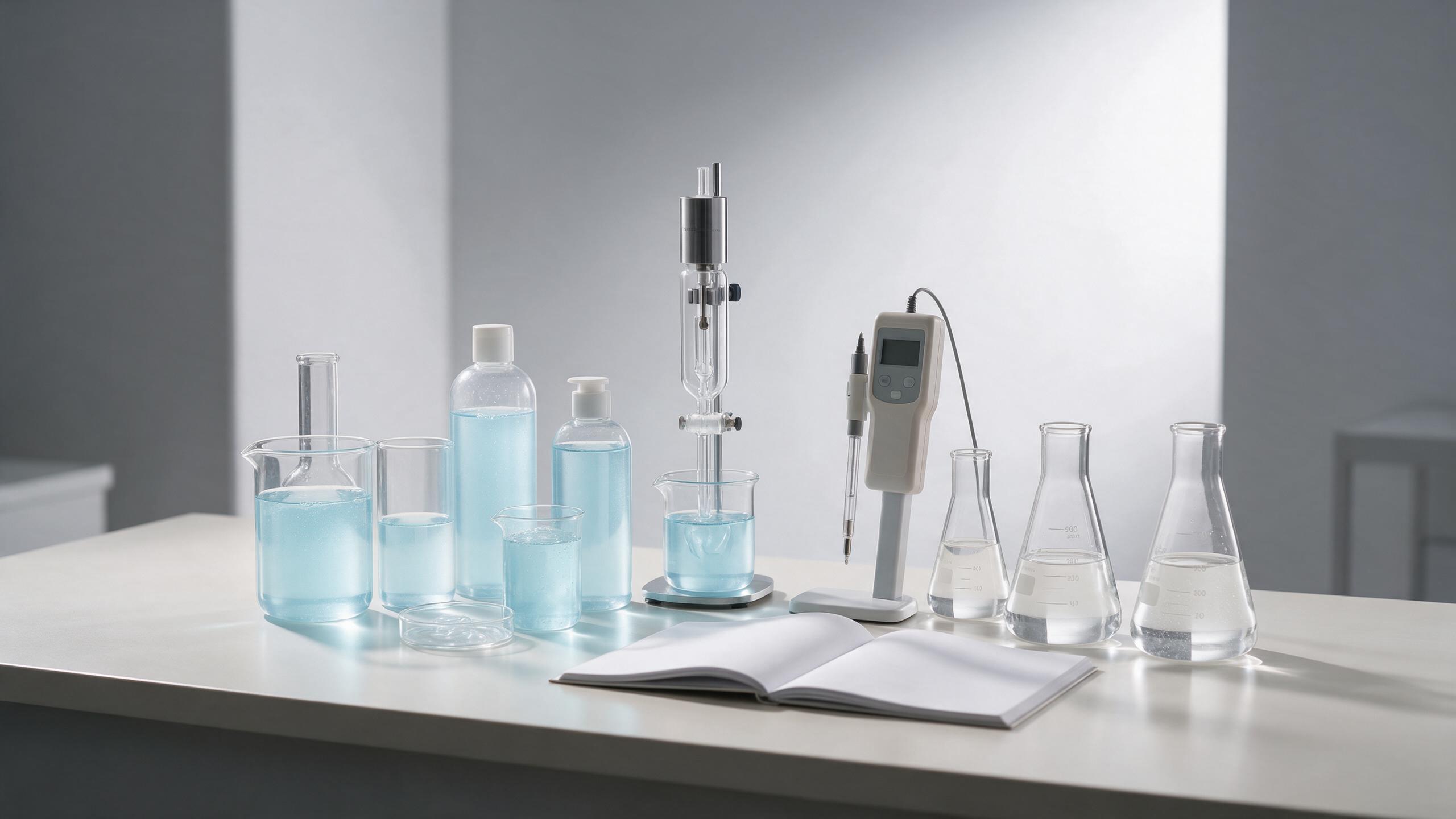
A practical troubleshooting sequence
- Confirm the test method. Re-measure retained and current samples at the same temperature, rest time, and instrument setting.
- Locate when the change begins. Compare shampoo readings after base preparation, thickening, pH adjustment, fragrance addition, cooling, and filling.
- Check batch records. Review shampoo raw-material lots, active matter where relevant, electrolyte additions, pH adjustments, temperatures, mixing conditions, and addition order.
- Run controlled bench splits. Change one variable at a time: for example, electrolyte level, final pH target, fragrance timing, or polymer level.
- Set a decision window. Define what result allows release, what triggers an adjustment, and what requires a broader stability review.
It is tempting to make several corrections at once when a shampoo is too thin. That may restore a reading for the moment, but it makes the actual cause harder to identify. A one-variable plan is slower on the first day and often faster across the full development cycle.
Design stability checks around the intended shampoo
Viscosity should be followed alongside pH, appearance, odor, separation, and packaging observations. The exact storage plan depends on the formula, intended market, pack, and internal quality approach, but it should include conditions that can reveal whether the shampoo recovers after temperature exposure and whether its flow stays appropriate for the selected dispenser.
Use retained samples from meaningful process stages, not only a final laboratory sample. Where a pump or flip-top package is planned, observe dispensing after the same storage points used for the bulk. The shampoo formulation, package, and consumer-use expectation need to be discussed together; a target that works in a beaker may not give the expected experience in the finished pack.
Turn the findings into a clearer OEM/ODM brief
A shampoo project is easier to manage when the brand, developer, and production team share the same viscosity language. Include the target range and method, product format, desired dispensing behavior, clarity or suspension expectations, fragrance status, planned packaging, known temperature exposures, and the stability checks required before release.
INTE Cosmetics can support early conversations around custom formulation requirements, packaging coordination, and the questions that should be clarified before a shampoo moves from concept to samples. The specific formula and testing plan still need to be confirmed for the product’s ingredients, package, target market, and project documentation.
Key takeaways
- Control shampoo viscosity by defining the measurement method and the point at which drift begins.
- Use a formulation-specific salt curve; more electrolyte may not mean higher viscosity.
- Track shampoo pH, temperature, mixing, late additions, and sample history alongside the shampoo viscosity reading.
- Use controlled bench splits and stability observations to identify causes before making broad corrections.
- Write the shampoo viscosity target, packaging context, and verification plan into the development brief.
For any shampoo, the most reliable next step is usually a short, documented diagnostic plan rather than a fast, untracked adjustment. That gives the development team a clearer route to a shampoo formula that can be evaluated consistently from lab work through scale-up.
 Hot News


