 EN


Which mask format fits hot climate markets?
Choosing a mask for a hot climate market is not mainly a question of which format looks most current. For a private-label team, the more useful question is how the mask will behave through filling, transport, storage, opening, and use when heat and humidity are part of normal life. A format that feels appealing in a temperate sample room can create a different experience after it has spent time in a warm warehouse or a shopper’s bathroom.
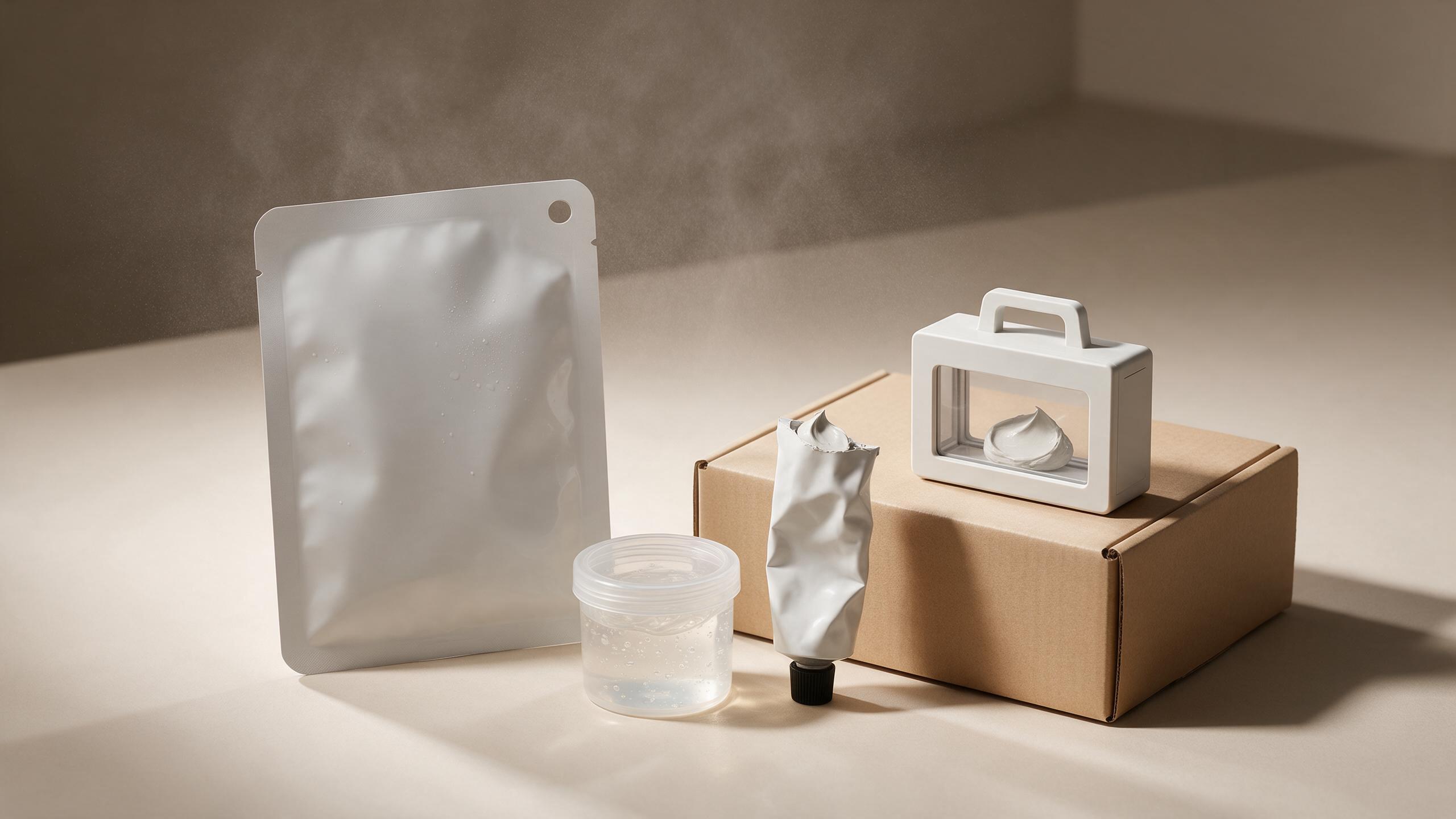
From a packaging-and-product coordination perspective, a mask should be assessed as a system: formula, substrate or container, single-use portion, outer pack, and the intended routine. That does not produce one universal winner. It gives a practical way to decide whether a sheet, gel, clay, cream, or powder mask fits the launch brief.
Start with the market condition, not the format name
“Hot climate” can describe several different realities: persistent humidity, dry heat, frequent temperature swings during distribution, or a mix of outdoor travel and air-conditioned retail. Those conditions affect more than product feel. They can influence evaporation, pack deformation, seal performance, product spread, and how a customer interprets freshness after opening.
Before comparing a mask format, write down four conditions: expected temperature exposure, humidity level, planned selling channel, and whether the product is single-use or repeatedly opened. A travel retail brief may favor compact portions and simple disposal. A spa-oriented brief may value application control and a more considered ritual. The same mask category can therefore support very different development paths.
A format-by-format decision tree
Sheet masks: convenient when the pouch is part of the solution
A sheet mask can fit hot climate markets when the brief calls for a familiar, individually portioned application. A sealed sachet limits the need for customers to store an opened product, and the substrate helps define the amount and placement of the essence. For promotional kits, travel sets, and one-time treatments, that simplicity can be useful.
The trade-off is that the pouch, seal, essence level, and substrate must work together. Heat can make leakage, seal integrity, or changes in the visual appearance of the saturated sheet more noticeable. The development discussion should include pouch barrier needs, fill consistency, secondary packaging, and how the mask will be handled after warm transit. It is not enough to approve the formula and pack separately.
Gel and hydrogel masks: strong sensory potential, more compatibility questions
Gel and hydrogel formats can give a cooling or cushioned sensory impression, which may align well with a warm-weather positioning. Yet “cooling” should remain an experience target to validate, not a promised outcome. Their fit depends on whether the gel structure retains its intended appearance, easy to lift, and comfortable to apply after relevant storage conditions.
For this type of mask, ask early about moisture migration, adhesion, pack opening, residue around the seal area, and whether the product is meant for face zones or full-face use. A hydrogel format can be compelling for a premium concept, but its package and handling expectations may be less forgiving than those of a simple rinse-off product. Samples should be evaluated in the actual proposed pouch or tray system.
Clay and cream masks: flexible positioning, but opened-pack behavior matters
Clay or cream formats offer broad room for texture and application stories. In a jar, tube, or airless package, a rinse-off mask can suit a repeat-use routine and a larger pack-size strategy. The key issue is not that one container is automatically suitable. It is how repeated opening, dispensing, and warm storage affect the product and the user’s practical experience.
A jar makes visual texture and scoop use easy to communicate, while a tube can make portion control and travel handling simpler. Teams should examine drying at the opening, mess during use, viscosity movement, and the relationship between formula rheology and dispensing force. If a pack requires a tool, include the tool in sample testing rather than treating it as an accessory chosen at the end.
Powder masks: lower water load, different preparation burden
A powder mask may be worth considering when a brand wants to emphasize preparation at the point of use or reduce the water carried in the finished product. However, it shifts work to the customer. The amount of water, mixing method, container cleanliness, and desired texture must be easy to understand. This format tends to fit a deliberate routine better than a quick, low-friction use occasion.
Humidity sensitivity is central here. The closure, dosing format, and carton protection should be checked against the realistic storage environment. A powder concept can be workable in a warm market, but only if the package preserves usability and the instructions are genuinely easy to follow.
Use a short validation plan before committing
There is no need to turn an early comparison into an overconfident claim. Instead, create a test matrix that links each mask format to its likely risks. Published cosmetic stability guidance commonly includes elevated temperature and hot-humid conditions as part of accelerated work; the exact protocol should be selected by qualified teams for the product and destination market.
- Formula appearance: color, odor, separation, syneresis, drying, and viscosity or gel integrity where relevant.
- Pack interaction: seal condition, leakage, panel distortion, closure function, dispensing, and label readability.
- User handling: opening force, portion control, application time, residue, rinse-off behavior, and disposal expectations.
- Logistics reality: shipping configuration, secondary pack protection, expected warehouse dwell time, and retail display conditions.
In practical project reviews, the most useful feedback is conditional: “the sheet stayed evenly saturated after warm storage,” or “the tube was still easy to dispense after cycling.” Vague comments such as “looks fine” make it harder to distinguish a formula concern from a pack-related concern.
Choose by the priority that matters most
| Primary priority | Format direction to explore | Questions to validate |
|---|---|---|
| Single-use convenience | Sheet mask | Pouch seal, essence retention, substrate handling, disposal |
| Premium sensory ritual | Gel or hydrogel mask | Structure, adhesion, tray or pouch interaction, warm-storage appearance |
| Repeat-use value | Clay or cream mask | Dispensing, opened-pack behavior, texture stability, cleaning expectations |
| Mix-at-use concept | Powder mask | Moisture protection, dosing, mixing clarity, closure performance |
For an OEM or ODM brief, the next step is to rank the non-negotiables. Is the mask expected to be single-use, strongly tactile, low-mess, easy to carry, or repeatedly used? Then identify the conditions that could change the answer: an oil-rich essence, a highly absorbent sheet, a wide-mouth jar, a high-viscosity cream, or a moisture-sensitive powder.
Turn the decision into a clearer development brief
INTE Cosmetics can organize early discussions around custom formulation, packaging coordination, and market-preparation questions for private-label skincare projects. That is most useful when the brief names the target climate and use occasion rather than asking for a generic “popular mask.” A productive brief states the format candidates, target user, intended pack size, distribution assumptions, preferred application experience, and questions that samples must answer.
In short, the right mask format for a hot climate market is the one whose formula, packaging, and use routine remain aligned under the conditions the product is likely to meet. Compare the formats, test the full product-pack system, and keep the final decision tied to a specific market and brand position.
 Hot News


